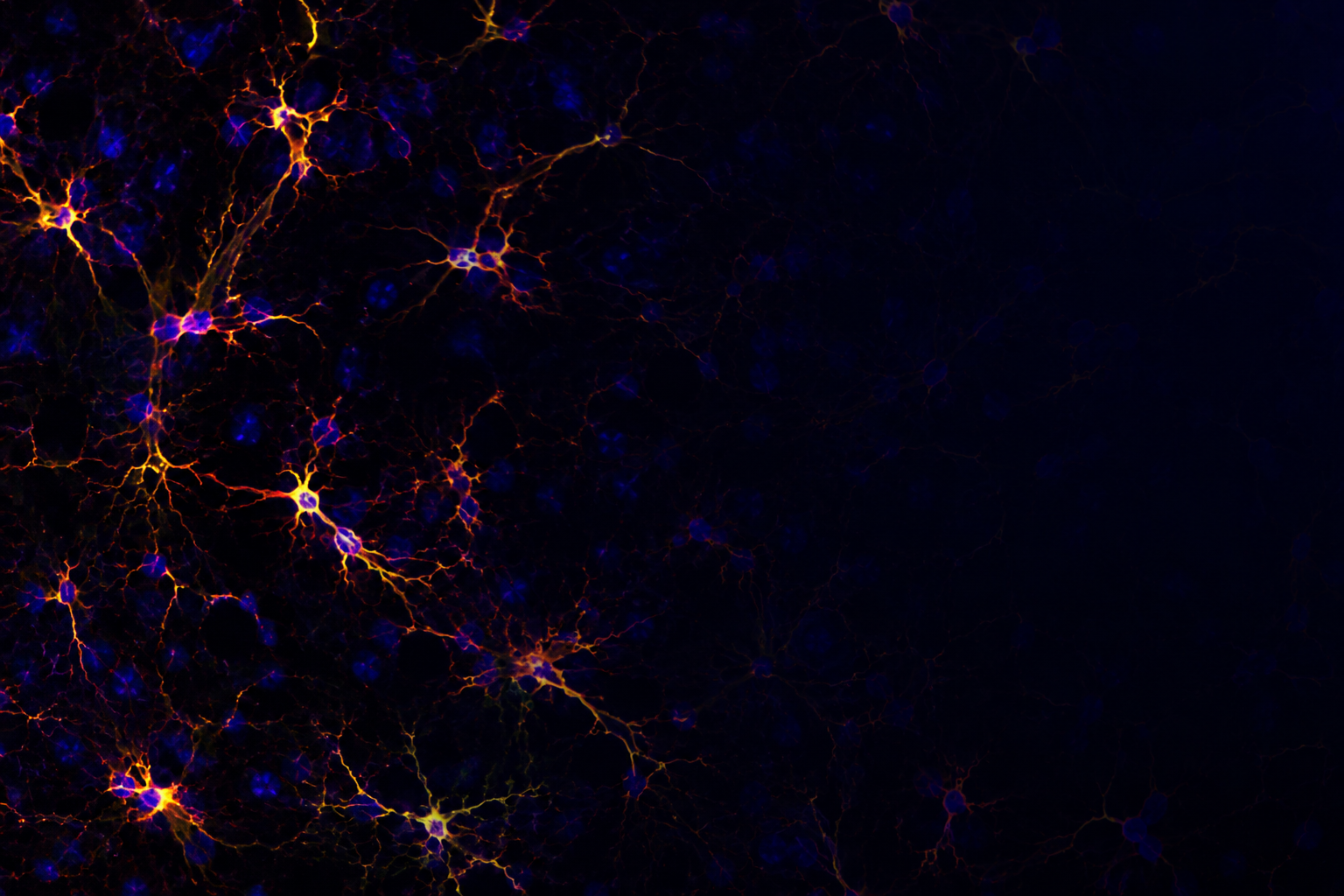
glia 101
meet the brain's unsung heroes
what are glia and why do we study them?
When most people think about the brain, they think about neurons—the cells that send electrical signals and allow us to think, move, learn, and remember.
But neurons are only about half of the cells in the brain.
The other half are called glial cells (pronounced glee-uh), and they are just as important.
For many years, scientists believed glia simply acted as "support cells" for neurons. We now know that glia actively help the brain function and stay healthy. They regulate inflammation, provide nutrients, remove waste, protect neurons from damage, and help maintain the connections that allow brain cells to communicate.
Without glia, the brain simply would not work.

the three major types of glial cells
-

microglia
The brain's immune cells
Microglia constantly patrol the brain, searching for signs of infection, injury, or damage.
They remove dead cells, clear away debris, and help protect the brain from disease. You can think of microglia as the brain's cleanup crew and first responders.
When microglia stop functioning properly, harmful proteins and cellular waste can accumulate, contributing to diseases such as Alzheimer's disease.
-

astrocytes
The brain's caretakers
Astrocytes are star-shaped cells that support neurons in many different ways.
They help control the chemical environment around neurons, provide energy, regulate blood flow, and maintain the blood-brain barrier—a protective shield that helps keep harmful substances out of the brain.
Astrocytes also help the brain respond to injury and disease. In some cases, however, these responses can become harmful and contribute to neurodegeneration.
-

oligodendrocytes
The brain's electricians
Neurons communicate using electrical signals. Oligodendrocytes help these signals travel quickly and efficiently by producing myelin, a fatty insulating layer that wraps around nerve fibers.
Myelin functions much like the insulation around an electrical wire.
When myelin is damaged, communication between neurons slows down or breaks down entirely. Myelin loss is a major feature of diseases such as multiple sclerosis and may also contribute to other neurological disorders.

Why Do We Study Glia?
Many brain diseases—including Alzheimer's disease, Parkinson's disease, multiple sclerosis, and other neurodegenerative disorders—have traditionally been viewed as diseases of neurons.
However, growing evidence suggests that glial cells play critical roles in the development and progression of these conditions.
In many cases, glial dysfunction may occur long before neurons begin to die.
By understanding how glial cells work—and what happens when they stop working properly—we hope to identify new ways to protect the brain and develop better treatments for neurological disease.
What Does the Prakash Lab Study?
The Prakash Lab is interested in how glial cells maintain brain health and how their dysfunction contributes to disease.
A major focus of our work is understanding how lipids (fats and fat-like molecules) regulate glial function. Lipids are essential building blocks of cell membranes, myelin, and many signaling pathways in the brain. When lipid metabolism becomes disrupted, glial cells can no longer perform their normal functions.
Using cell culture systems, mouse models, human tissue, and advanced molecular approaches, we investigate how changes in glial biology contribute to neurodegeneration and how these discoveries might lead to new therapeutic strategies.
Because understanding glia means understanding the brain.